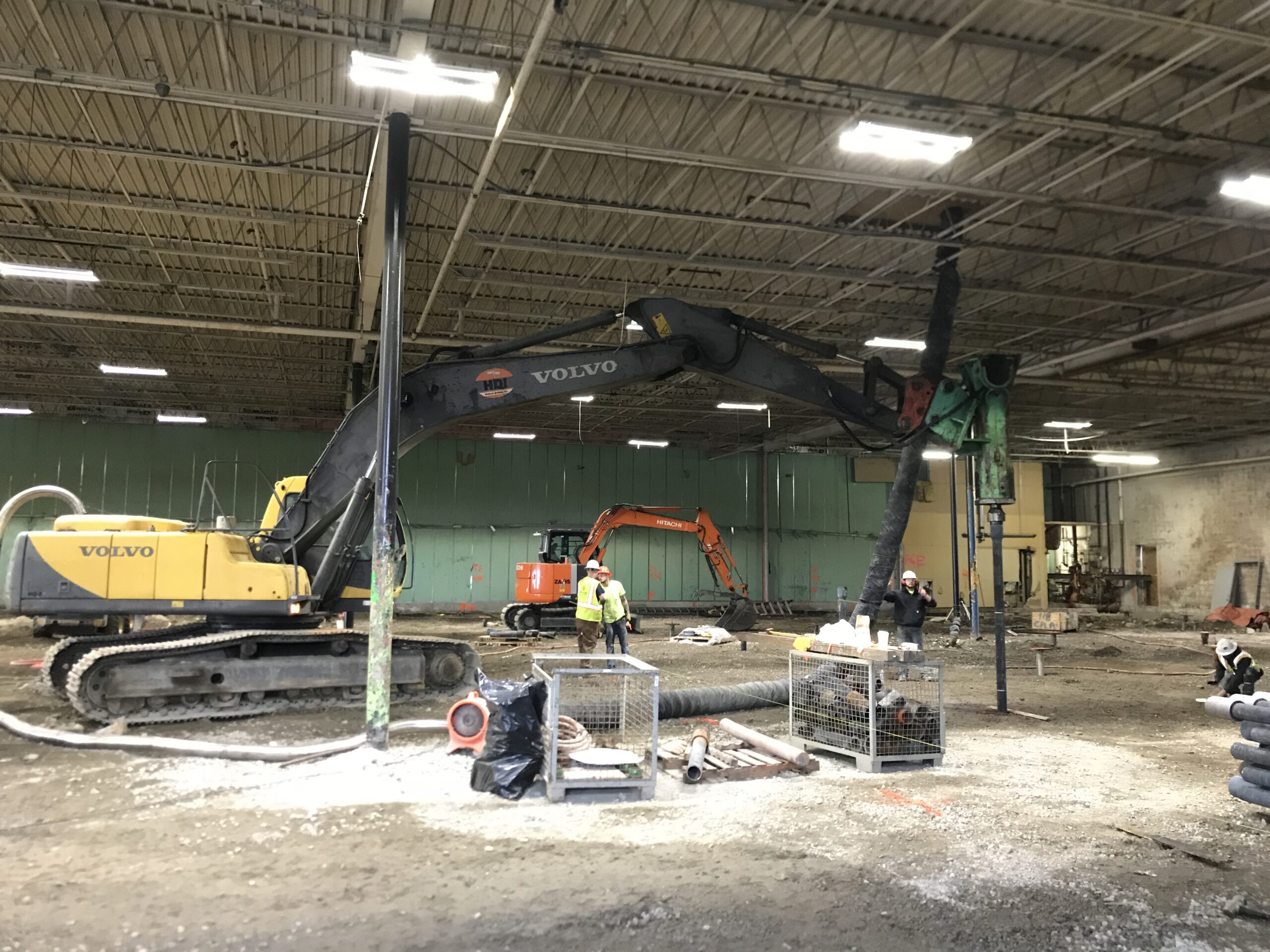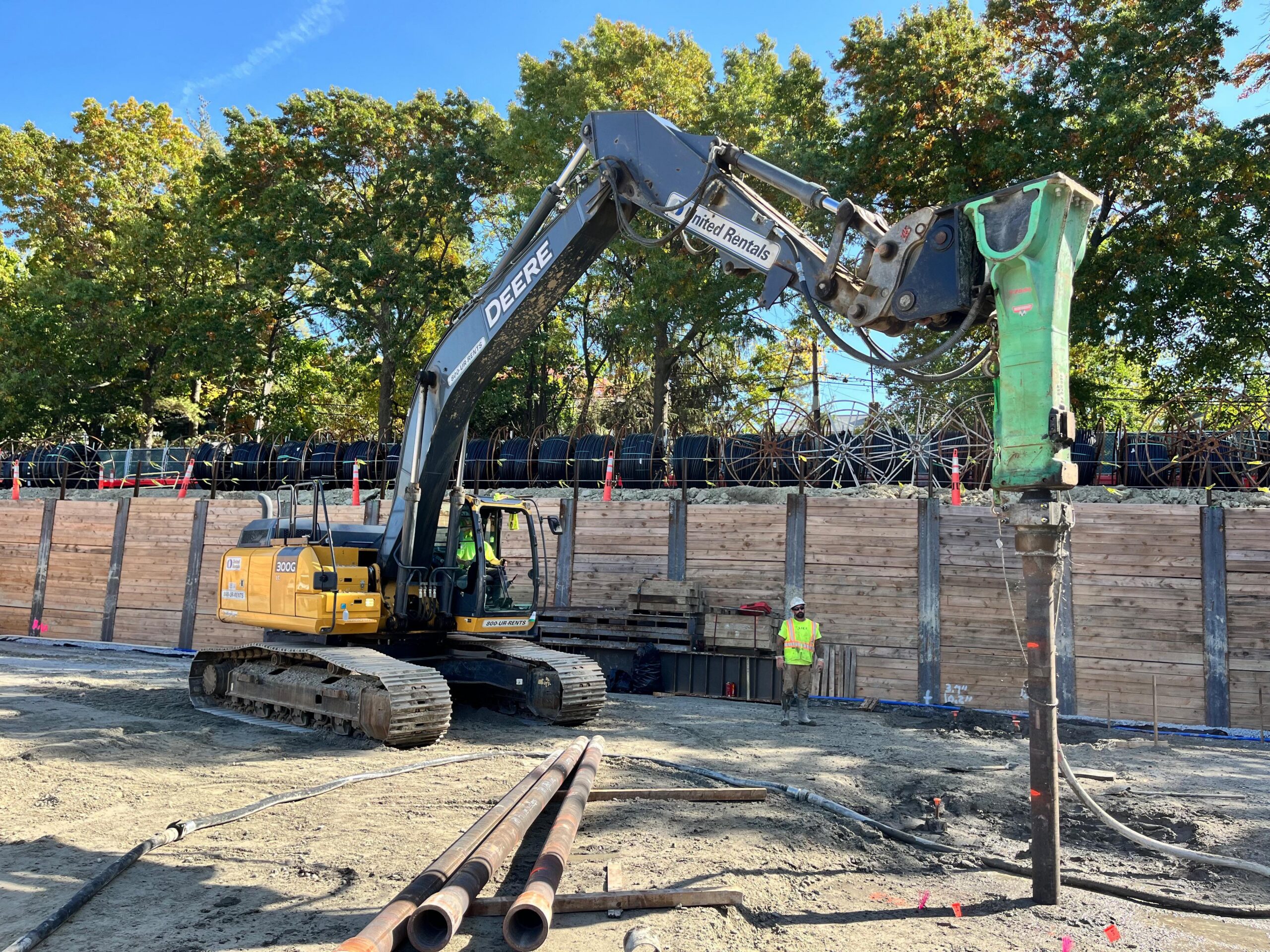

Ductile Iron Piles provided a cost-effective, low vibration deep foundation solution for the heavy building addition in the constrained work areas without disrupting normal building activities.
Project Description:
The project consists of two, 3-story additions on opposite sides of the existing Johnson Hall Building on the campus of Tennessee Tech University in Cookeville, Tennessee. On one side, the addition covers an area of about 2,300 square feet, while a smaller addition occupies 500 square feet. The concrete-frame structure has maximum column loads on the order of 250 kips, with wall loads on the order of 10 kips per linear foot.
Geotechnical Conditions:
Soil conditions consist of an upper stratum of soft to stiff plastic clay (CH), lean clay (CL) and silt (ML), which was encountered to depths of 19 to 22 feet. The upper fine-grained soils were underlain by moderately weathered, good to excellent quality, hard limestone bedrock. Groundwater was not encountered in the borings.
Project Challenges:
Provide a cost-effective, low vibration deep foundation solution for the heavy building addition in the constrained work areas without disrupting normal building activities. Limit differential settlements between the new addition and the abutting existing building.
Advantages
- Easy site access in constrained working area
- Low vibrations near existing building
- Minimize differential settlements between the new construction and the existing structure
Design and Construction Solution
To accommodate the geotechnical, structural, and logistical challenges, the building foundations were designed to be supported by high-capacity Ductile Iron Piles (DIPs.) Rembco Geotechnical Construction was awarded the project and provided a design solution using non-grouted (exterior) Series 118/9.0 (118 mm O.D. and 9 mm wall thickness) DIPs installed with 118 mm heavy duty (HD) driving shoes. DIPs were designed to develop the required compression demand of 96 kips by achieving “set” (1” or less of penetration in 50 seconds) on the limestone bedrock.
The Ductile Iron Pile design capacity was verified by load testing to 192 kips, twice the design load. After performing a successful load test program, Rembco installed the production piles. Rembco used a Caterpillar 325F excavator equipped with a Rammer BR2577 percussion hammer to install the DIPs. A total of 130 DIPs were installed in less than 1 week. After installation, the DIPs were fill with grout and an oversized bearing plate was positioned at the top of the pile.
Project Team Members
DIP Design/Build Installer: Rembco Geotechnical Construction
Geotechnical Engineer: LaBella Associates
Structural Engineer: Logan Patri Engineering
General Contractor: W&O Construction