
A Foundation for Boston’s Made Land (as featured in Sept/Oct 2026 DFI Deep Foundations Magazine)
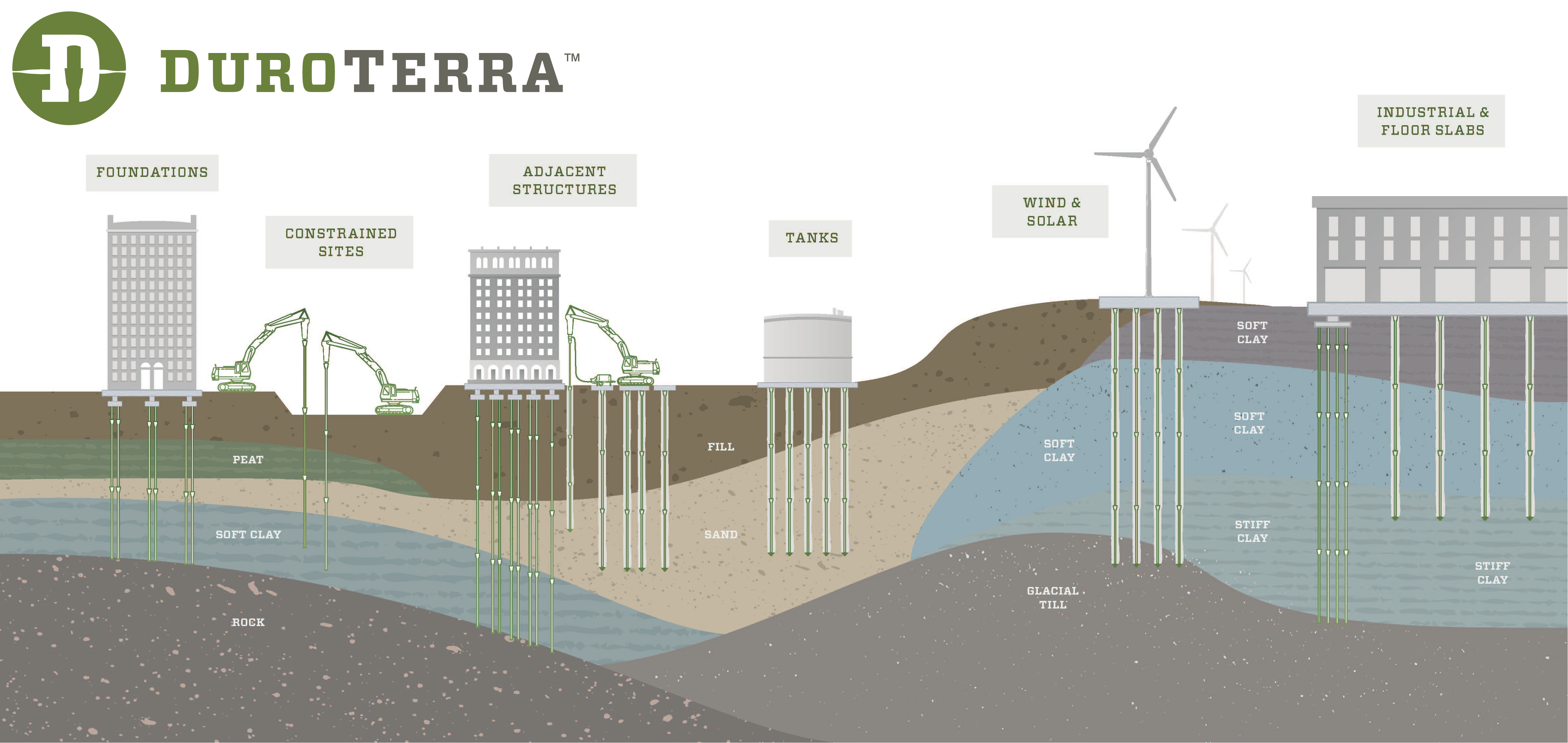
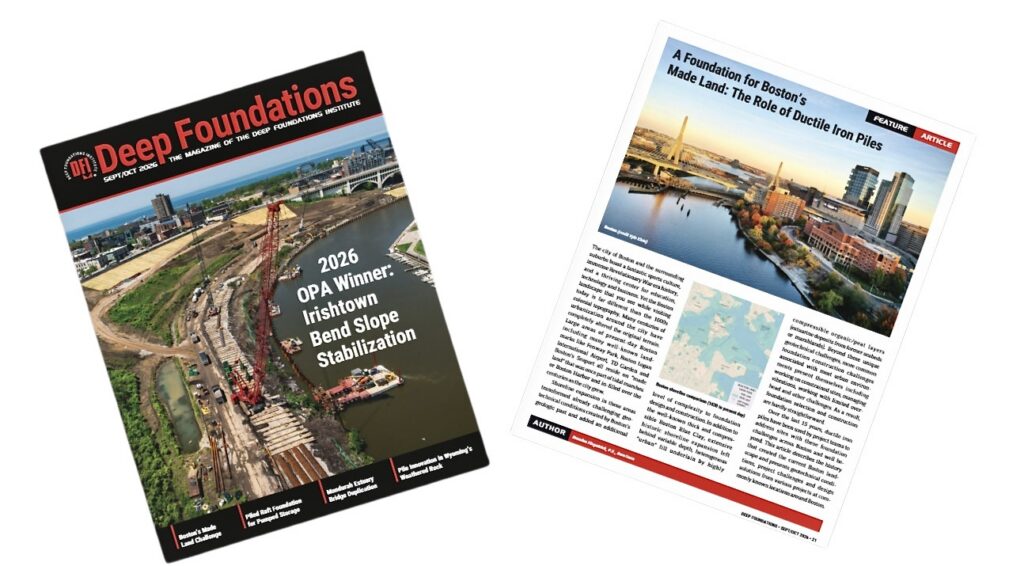
As we look forward to DFI 51 in Orlando next week, we’re excited to highlight a feature article in the recent edition of DFI’s Deep Foundations magazine written by our company President, Brendan FitzPatrick. This month’s DuroTerra Dialogue provides an abridged version of the article, highlights of the individual projects featured, and a link to the published version.
The City of Boston, Massachusetts and the surrounding suburbs boast a fantastic sports culture, immense revolutionary war era history and a thriving center for education, technology, and business. Yet the Boston landscape that you see while visiting today is far different than the 1600’s colonial topography. Many centuries of urbanization around the city have completely altered the original terrain. Large areas of present-day Boston including many well-known landmarks like Fenway Park, Boston Logan International Airport, TD Garden, and Boston’s Seaport all reside on “made land” that was once part of tidal marshes or Boston Harbor and in-filled over the centuries as the city grew.
Shoreline expansion in these areas transformed already challenging geotechnical conditions created by Boston’s geologic past and added an additional level of complexity to foundation design and construction. In addition to the well-known thick and compressible Boston Blue Clay, extensive historic shoreline expansion left behind variable depth, heterogenous “urban” fill underlain by highly compressible organic/peat layers (estuarine deposits from former seabeds or marshlands). Besides these unique geotechnical challenges, more common foundation construction challenges associated with most urban environments present themselves including working on constrained sites, managing vibrations, working with limited overhead, and other challenges. As a result, foundation selection and construction is hardly straight-forward.
 Over the last 15 years, Ductile Iron Piles have been used by project teams to address sites with these foundation challenges across the City of Boston and well beyond. This article describes the history that created the current Boston landscape and presents geotechnical conditions, project challenges and design solutions from various projects at commonly known locations around Boston.
For more information about Boston’s geologic and construction history, along with the role that Ductile Iron Piles has played, please check out the recent publication in DFI’s Deep Foundation magazine that discusses Boston’s history and also presents snapshots of projects where Ductile Iron Piles were selected as the highest value foundation for projects around the city. If you’d like to learn more about the individual projects featured, check out the links below.
PROJECT EXPERIENCE – EAST BOSTON – WEBSTER STREET
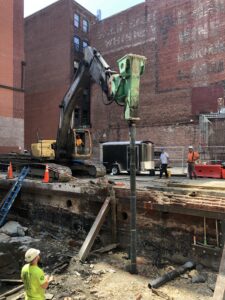
Ductile Iron Piles designed for 40 ton capacities were driven to depths ranging from 65 to 85 to achieve capacity in glacial till and on rock in lieu of steel H-piles, lower capacity helical piles, and timber piles. For more information, check out the project summary.
PROJECT EXPERIENCE – FENWAY DISTRICT – PETERBOROUGH STREET
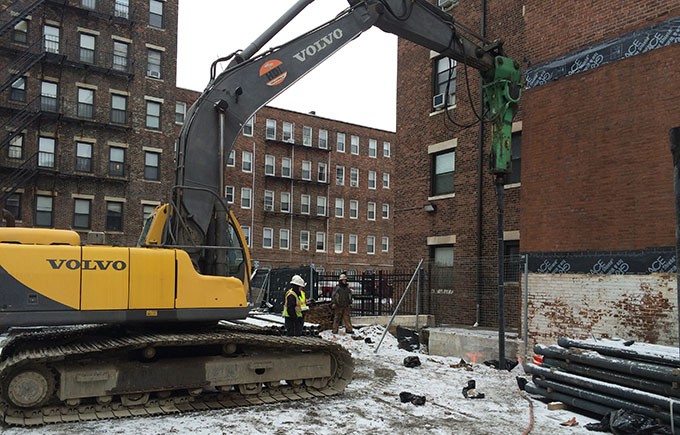
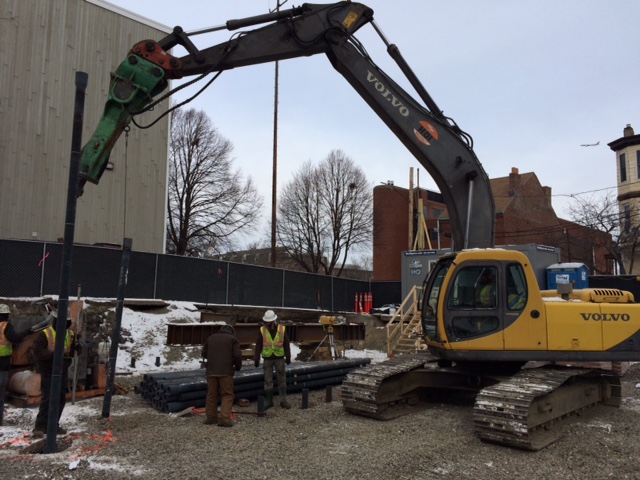
Ductile Iron Piles designed for 50 ton capacity were installed to depths of 175 feet to terminate on rock as an alternative to steel H-piles on a constrained urban site where vibrations, access and material delivery were key considerations. For more information, check out the project summary.
PROJECT EXPERIENCE – BOSTON GARDEN – FRIEND STREET
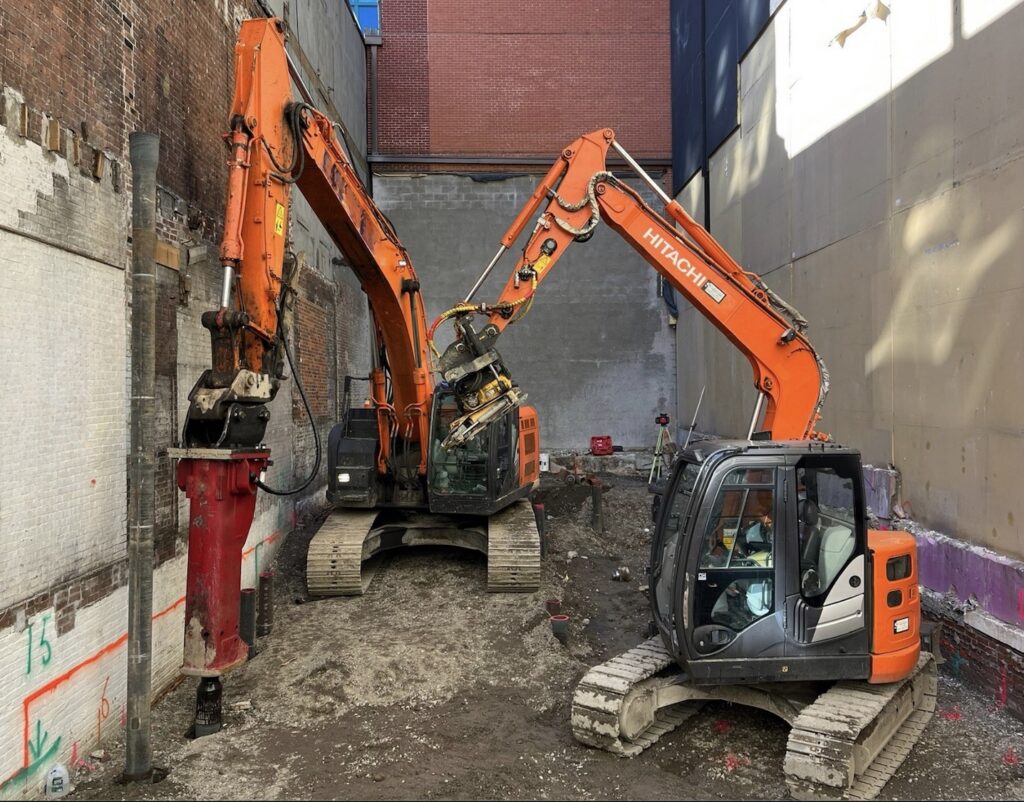
Support for a new 7-story condo building was provided with 50 ton Ductile Iron Piles as an alternative to drilled micropiles. The low vibration piles were driven through fill, organics and soft clay to terminate in till and rock on this extremely narrow site. Following building completion, a second 7-story condo immediately adjacent to the site was also supported by Ductile Iron Piles on an even narrower, limited access site. For more information, check out the project summary.
PROJECT EXPERIENCE – SEAPORT DISTRICT – DRYDOCK AVENUE

Construction of a new station to house EMS operations in the rapidly growing Seaport District required deep foundation support. Ductile Iron Piles driven through fill, organics, clay and till to terminate on rock were specified for both compression and tension resistance. For more information, check out the project summary.
PROJECT EXPERIENCE – SOUTH BOSTON – K STREET
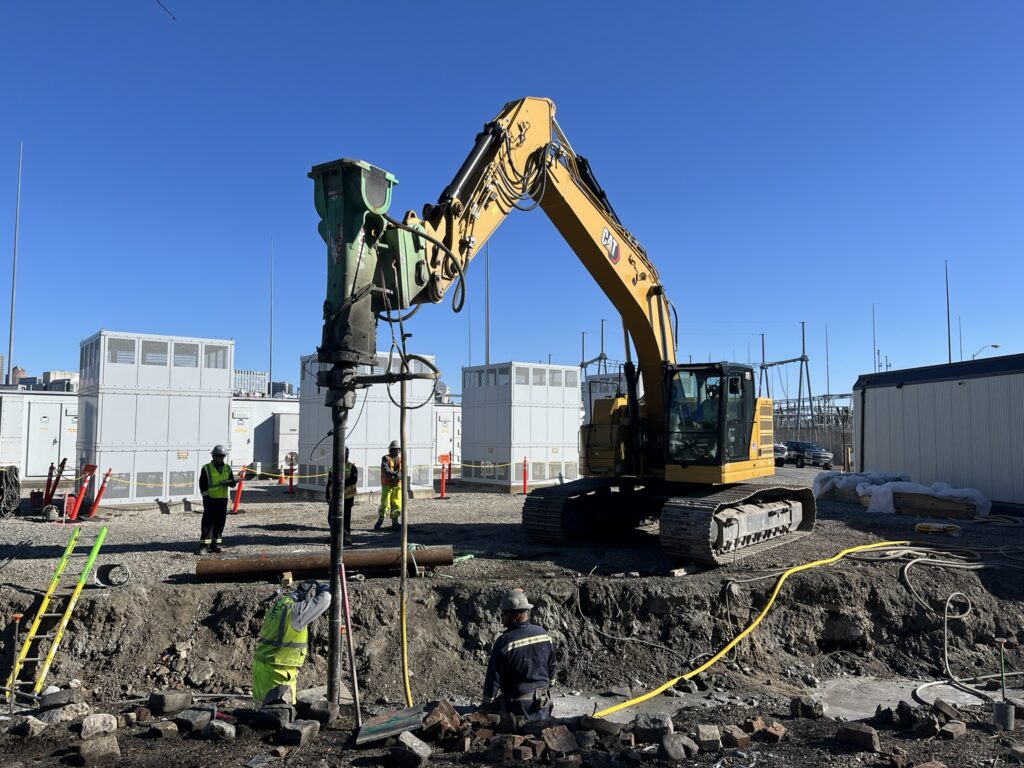
A new substation resiliency project featuring 3,600 LF of perimeter security and protection fences required deep foundations be designed to resist compression, tension and lateral loads. A solution of exterior grouted Ductile Iron Piles driven to penetrate fill, organics and thick marine clay to depths of over 100 feet to terminate on glacial till and rock was combined with traditional drilled micropiles to penetrate areas of buried granite blocks and other obstructions. For more information, check out the project summary.